
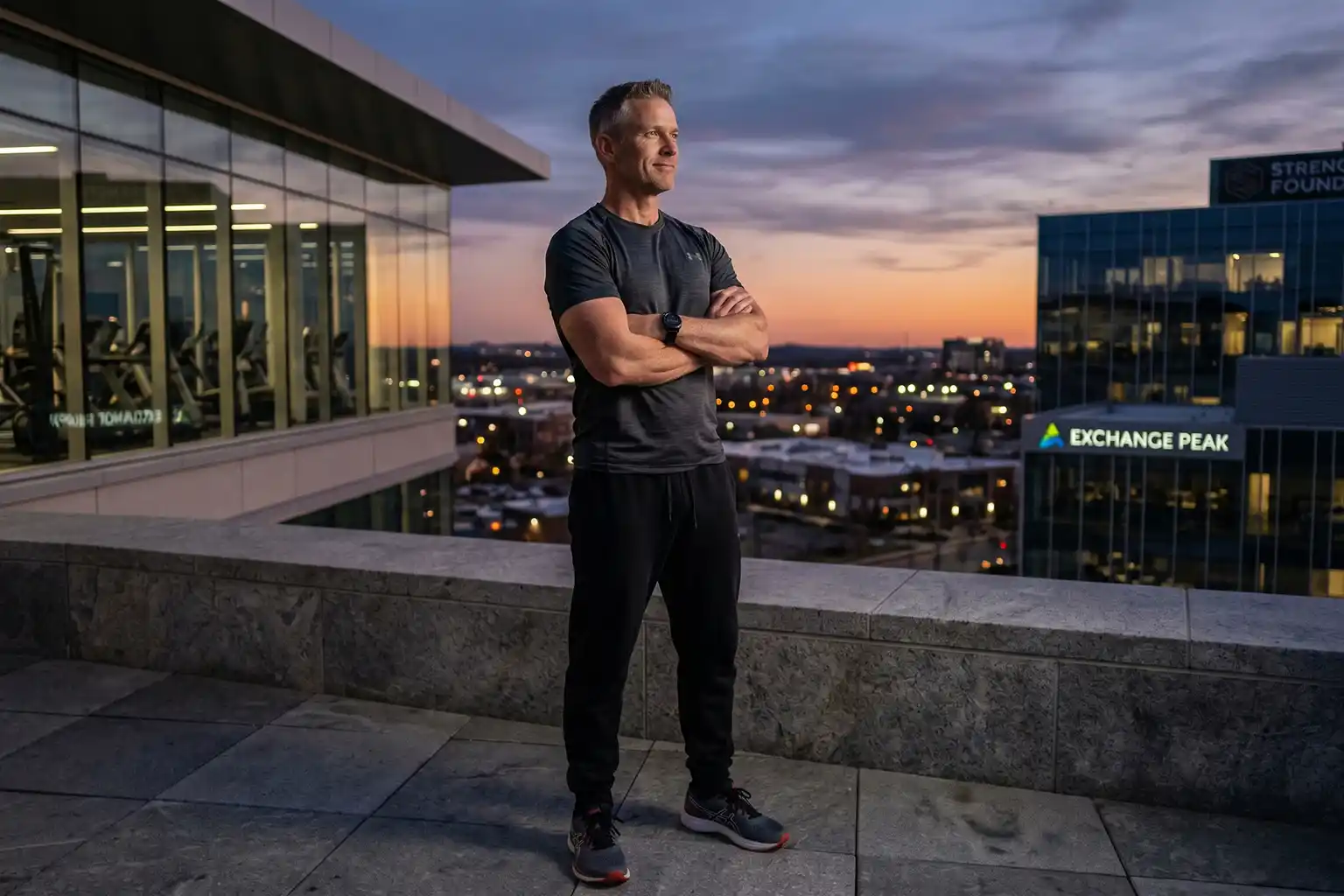
He Signed a $120,000 Lease at Age 21. Everyone Thought He Was Mad. He Did It Anyway.
Todd Kuhn's grandfather built the equipment in a garage under his house. Not a prototype. Not a test run. The actual Pilates reformers that went into the actual studio. His friend down the road made the steel frames. They powder-coated them. His grandfather cut and assembled the timber carriages. That's how Core Lab started.
Twenty-plus years later, Todd has built and sold two fitness businesses, grown a studio chain to 20 locations, and watched it get acquired by a publicly listed company. He's never had a bank loan. Never taken an investor's dollar. He walked into Chinese factories with no translator, communicated what he wanted through sign language, and flew back four or five times a year until he got it right.
This conversation happened on a Startups with Stu episode, and it's one of those where the business lessons don't feel like lessons at all. They feel like a guy who just figured things out by doing them.
The Fork in the Road at 17
Before any of this, Todd Kuhn was a rugby league player in Australia. Good enough to get scouted — not by a small club but by the largest, most professional, most funded organization in the country. He was 17 or 18.
Then they moved on from him. Dropped him to a lower-level organization. And here's where a lot of people take years to recover and never quite shake the chip on their shoulder. Todd kind of just looked around at what else was available and made a different calculation.
Professional athletes train three nights a week and give up their Saturdays. He was already studying business marketing at uni. His father had always been entrepreneurial, always earning more from doing less. The fork in the road was real — he could keep pushing in sport, or he could choose the path where the work was different. He chose business.
No dramatic moment. No injury. Just a clear-eyed decision about where his energy would compound faster.
Scout Halls, 400 Students, and $150,000 Cash
The fitness pivot started, as many things do, through a partner. His girlfriend at the time was doing Pilates, and her instructor was full — couldn't take any more clients. Someone said Todd should get certified and start teaching classes. So he did. They put it together and started running Pilates mat work classes.
Not in a studio. In scout halls. Town halls. Forty locations across the city, running multiple sessions per term. They had about 400 people cycling through each term and were making good money. In six months, they had accumulated $150,000 in cash.
Most people in that position would keep running the low-overhead model forever. Todd and his partner wanted something real. A location. A studio that brought strength training, cardio, and Pilates all under one roof. They found a spot in their hometown that felt exactly right.
The rent was $120,000 a year. He was 21.
Everyone thought they were mad. He signed the lease. "Just have a go," he said on the podcast. "What's the worst that can happen?" It's a phrase he kept coming back to, and it's not bravado. It's something closer to a genuine risk calculation. He had cash. He had customers already. He had a product people wanted. The math worked if he stayed focused. So he went.
That business was called Pure Health Clubs. It's still running today.
The Hawaii Mastermind That Changed Everything
Todd exited Pure Health Clubs in 2012 — not through a sale but through a partnership dissolution tied to a marriage breakdown. Double hit, actually: the gym business and a nutrition coaching venture he was also involved in, both unraveling at the same time. He got told in one of those businesses that he wasn't useful anymore in his current role.
He let that sting. And then he used it.
He started over with a smaller format. 1,000 square feet instead of 6,000. Thirty percent of the rent, or less. Pilates and yoga only, branded as Rebalance. The goal was deliberately modest: one profitable studio. Build from there.
Then he joined a coaching program and got invited to a mastermind in Hawaii. Five days in a room breaking down the business — what's working, what's not, what's the bigger goal. By the end of that weekend, his wife had gotten him off 95% of the classes he was still personally teaching.
That's the penny-drop moment he talks about when founders ask why they feel stuck. You can build something that grows quickly and still be running it like you're the only employee. Someone from the outside has to hold up a mirror. Todd's coach, Travis, ran a partnership model and pushed them to stop teaching and start expanding. The shift wasn't about strategy. It was about getting out of the business so the business could grow.
From that mastermind: a goal of ten locations. Three years later, they had ten. Two years after that, twenty — just before Covid.
Selling to an ASX Company and Watching the Brand Disappear
Rebalance got to 16 locations after Covid-related closures. Twelve owned, four franchised. They'd engaged a business broker looking at the franchise route, but something interesting kept happening: people loved the concept from the outside and then sat across the table wanting to own a studio from a beach somewhere. That's not a franchisee. That's a dream.
The broker had a contact at an ASX-listed company wanting into the boutique fitness space. The conversation moved quickly. The valuation was standard — a multiple of bottom-line profit. Take it or leave it. They took it.
Here's the legacy part: that company has since acquired the rights to Club Pilates, one of the largest Pilates brands out of the US. Every single one of Todd's old locations is being converted. Former employees have been reaching out saying it feels like a sad day. Todd takes it differently. Progress is progress. Every brand has a lifecycle. When someone else owns it, their interests shape what it becomes.
He built it. It existed. It's still there in a different form. That's not nothing.
No Debt, No Investors, No Apologies
Here's the thing that stopped the conversation cold: across two complete business cycles — two exits, twenty locations, decades of expansion — Todd Kuhn has never had a business loan. Never had an outside investor. Everything funded through the business reaching profitability and reinvesting.
He said it almost apologetically, like he wasn't sure if it was smart or just lucky. It's neither. It's a philosophy. He's always wanted to report to himself and his partner. The moment someone else owns a percentage, you're at their mercy a little. He wanted to steer.
Stu pushed back gently — shared his own experience raising money for an edtech startup, how going from cash-strapped to capitalized changed what was possible. Todd heard it. He's not closed to outside capital at some future point. But his instinct has always been: minimize startup costs, maximize profitability, control what you can.
There's a version of this that sounds naive. In Todd's case it's produced two exits and a growing third business. The model is internally consistent: keep startup costs low, open lean, reach profitability fast, then use the profits to fund the next one. Buying timber floors on Facebook Marketplace for $2,000 here, $4,000 there. Stressful at the time. Rewarding every time the next location became possible.
No Translator, Just Sign Language
Core Lab — the current business — makes Pilates equipment. Todd designs it; until recently, someone else manufactured it. He's been working toward vertical integration with his own factory.
The sourcing story is one of the better ones in this episode. His local friend with a steel welder made the early frames. His grandfather built the carriages in a garage. When the friend finally told him to go overseas and see what was possible, Todd didn't hire a sourcing agent. He flew to China himself. Still does it four or five times a year.
He walks into factories. No translator. Uses sign language to communicate what he needs and doesn't need. Keeps sampling until the product improves. He recently developed a new wheel for the reformers — went back and forth with multiple suppliers, ran sample tests, kept iterating. He lit up talking about it on the podcast. Not because it's glamorous but because it's a puzzle he's still genuinely interested in solving.
That's the tell with founders who build things that last. The details still excite them twenty-five years in.
What Stuck With Me
Todd's advice for aspiring founders wasn't location, software, or equipment. It was persistence. And then he said something worth sitting with: the values of your business will usually be an extension of your values. If you want to create the right environment, you have to live it first.
He also said he'd tell his younger self to delegate faster. Get off the classes. Give away the hats you hate, and then — harder part — give away some of the hats you love. The ones you're holding onto because no one else will do them right. Those are the ones keeping the business small.
The guy bootstrapped two exits, flew to Chinese factories with no translator, and had his grandfather build the first equipment by hand. And the thing he'd do differently is delegate more.
That's either the most counterintuitive founder advice you'll hear, or it's the only advice that actually matters.
Related blogs


Subscribe for Updates
Subscribe to the Startups With Stu newsletter and get advice and stories sent straight to your inbox to help launch your business to the moon!
Comments